10 Challenges and Strategies for Strategic Risk Management: How ALG Centre Can Help Develop Risk Management Strategies
10/19/20258 min read
Introduction to Strategic Risk Management
Strategic risk management is an essential discipline within contemporary business operations, focusing on the identification, assessment, and mitigation of potential risks that could adversely impact an organization’s strategic objectives. As businesses increasingly navigate dynamic market conditions and complex global environments, the significance of effectively managing strategic risks becomes paramount. These risks can arise from various sources, including shifts in economic conditions, technological advancements, regulatory changes, and evolving consumer behaviors.
The core objective of strategic risk management is to enable organizations to not only understand the risk landscape but also to leverage this understanding to create value and maintain a competitive edge. By implementing comprehensive risk management frameworks, businesses can proactively address threats while simultaneously capitalizing on opportunities. This dual approach fosters resilience, ensuring that organizations can adapt to unforeseen challenges and seize advantageous circumstances as they arise.
Effective strategic risk management is characterized by a systematic process that involves the continuous monitoring and evaluation of potential risks. This requires a deep alignment between an organization’s risk appetite and strategic decision-making. By clearly defining their risk tolerance levels, companies can make informed choices that align with their long-term goals. The benefits of such an approach extend beyond mere compliance or damage control; organizations that excel in risk management often experience enhanced reputation, better stakeholder confidence, and increased profitability.
In an era where the pace of change is unprecedented, strategic risk management has emerged as a critical component of sustainable business practices. Organizations that prioritize this discipline are better equipped to withstand disruption, adapt their strategies, and thrive in competitive markets. In the following sections, we will explore common challenges organizations face in this area and how tailored risk management strategies, such as those offered by the ALG Centre, can facilitate effective risk mitigation and strategic alignment.
Identifying the Common Challenges in Strategic Risk Management
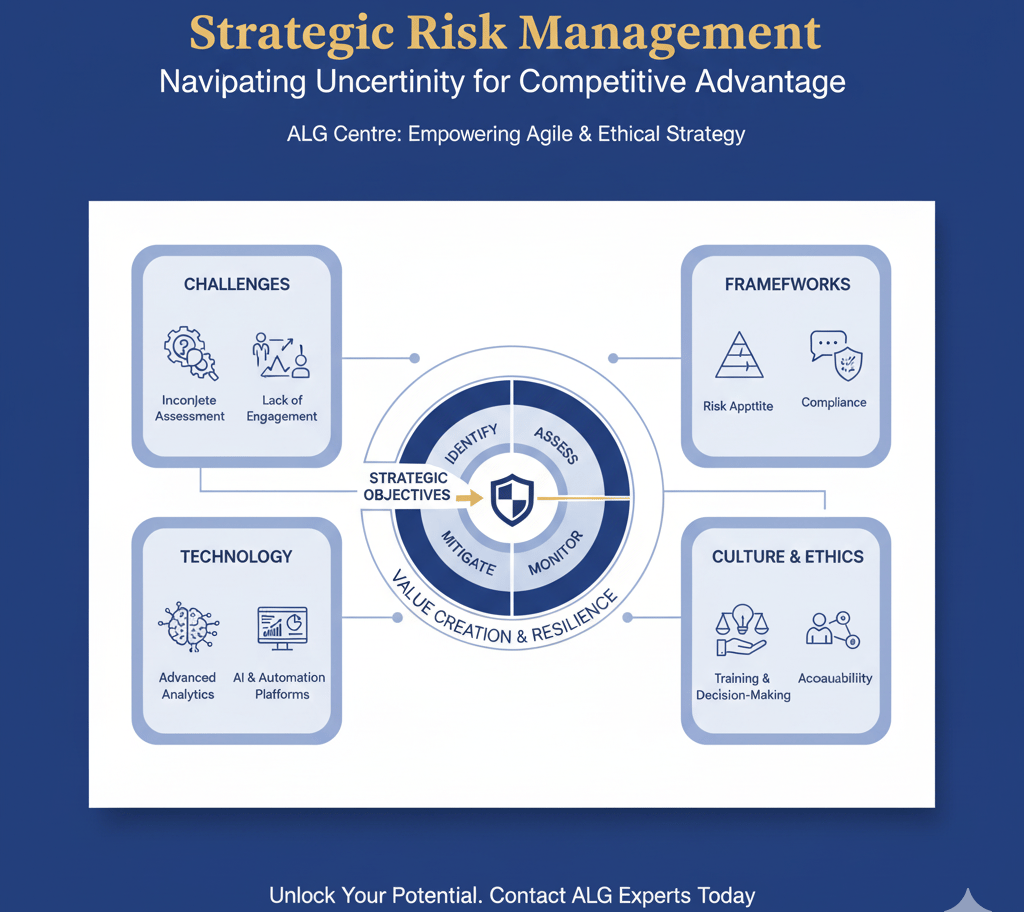
Strategic risk management stands as a cornerstone of effective corporate governance and decision-making. However, organizations often encounter multiple challenges that impede the identification and management of strategic risks. One significant challenge is incomplete risk assessment, which occurs when organizations fail to comprehensively analyze potential risks. This shortcoming can result in misguided strategies that may not adequately protect the organization from unforeseen challenges.
Another common issue is the lack of employee engagement. Employees at various levels hold valuable insights into potential strategic risks, but if they are not actively involved in the risk management process, their perspectives may remain untapped. This disengagement can lead to a culture where risks are either underestimated or overlooked, ultimately affecting the organization’s overall strategic vision.
The influence of external factors represents yet another challenge. Organizations are often vulnerable to risks posed by economic fluctuations, regulatory changes, and competitive landscapes. These external pressures can alter the operational environment, necessitating a dynamic approach to risk management that many organizations struggle to implement effectively. Furthermore, the rapid pace of technological advancement can render traditional risk management frameworks obsolete, making it essential for organizations to adapt their strategies accordingly.
Lack of adequate resources, both financial and human, can also hinder effective strategic risk management. Many organizations may find themselves ill-equipped to address the multifaceted nature of risks, resulting in insufficient response mechanisms. Coupled with this is the challenge of integrating risk management into the strategic planning process; without a clear alignment, risk management efforts may exist in isolation rather than as part of a holistic strategic approach. Ultimately, these challenges underscore the need for proactive strategies that enhance the organization’s resilience to navigate an increasingly complex risk landscape.
Building a Comprehensive Risk Management Framework
Establishing a comprehensive risk management framework is fundamental for organizations aiming to navigate the complexities of strategic risk effectively. A robust framework serves as a structured approach that guides businesses in identifying, assessing, and responding to potential risks. This framework should accommodate various challenges that organizations face, ensuring that risk management is not only reactive but also proactive.
One of the key components of an effective risk management framework is the implementation of sound risk assessment techniques. These techniques involve systematic processes for identifying risks, evaluating their potential impacts, and prioritizing them based on their likelihood of occurrence. By employing qualitative and quantitative assessment methods, organizations can gain insights into vulnerabilities and strengths, thus allowing for more informed decision-making.
Another essential element is crafting clear and concise risk appetite statements. A risk appetite statement defines the level of risk an organization is willing to tolerate in pursuit of its objectives. This serves as a guiding principle for decision-makers at all levels of the organization, ensuring that risk-taking aligns with strategic goals. Communicating this appetite effectively is imperative, as it fosters a culture of transparency and accountability throughout the organization.
Furthermore, communication strategies play a pivotal role in the success of the risk management framework. Ensuring alignment across various departments involves establishing clear channels of communication, where individuals can share insights and observations regarding potential risks. Regular training and updates can reinforce the importance of risk awareness, promoting a shared responsibility for managing risks among all employees.
Ultimately, a comprehensive risk management framework not only addresses the challenges organizations face but also positions them to thrive in an uncertain environment. By integrating effective risk assessment techniques, establishing defined risk appetite statements, and fostering clear communication strategies, businesses can create a resilient foundation for strategic risk management.
Leveraging Technology for Risk Management
In an increasingly complex business environment, organizations face a multitude of risks that can significantly impact their operations. To effectively tackle these challenges, leveraging technology for strategic risk management has become essential. Advanced analytics, artificial intelligence (AI), and dedicated risk management software provide the tools necessary for organizations to enhance their risk identification, analysis, and monitoring processes.
Advanced analytics, encompassing big data and predictive modeling, empowers organizations to sift through vast amounts of data to identify potential risks. By analyzing historical trends and patterns, companies can forecast potential disruptions and develop proactive strategies to mitigate them. This data-driven approach allows for a more nuanced understanding of risk exposure, leading to informed decision-making and improved resource allocation.
Artificial intelligence further enhances risk management capabilities by automating routine tasks and enabling real-time analysis. AI algorithms can process data at an unprecedented speed, identifying emerging risks that may go unnoticed through traditional methods. By deploying AI-driven solutions, organizations can streamline their risk assessment processes, allowing for timely interventions and minimizing the impact of potential threats on business continuity.
Furthermore, specialized risk management software offers integrated platforms that facilitate collaboration among teams while providing comprehensive dashboards for monitoring risks. These tools enable organizations to maintain a clear overview of their risk landscape, prioritize risk mitigation efforts, and ensure compliance with regulations. By centralizing risk management activities, organizations can enhance transparency, communication, and accountability throughout the enterprise.
In summary, the integration of technology into strategic risk management not only enhances the efficiency and effectiveness of risk mitigation strategies but also fosters a culture of proactive risk management. As organizations continue to navigate an evolving risk landscape, embracing advanced analytics, AI, and dedicated risk management software will be paramount in building resilience and ensuring long-term success.
Cultivating a Risk-Aware Culture within Organizations
Building a risk-aware culture within an organization is essential for effective strategic risk management. Such a culture fosters an environment where employees at all levels recognize, understand, and actively engage with risks that may impact their work and the organization’s objectives. To achieve this, organizations must implement strategies that promote engagement, accountability, and proactive management of risks.
One of the fundamental strategies is to provide comprehensive training and resources that empower employees to identify potential risks. Through workshops, seminars, and regular training sessions, staff can learn about the various types of risks—operational, financial, reputational, and strategic—specific to their roles. This education helps to demystify risk and provides tools for employees to recognize and address risks as they arise.
Encouraging open communication is another critical element in cultivating a risk-aware culture. Organizations should create safe channels for employees to voice concerns or report potential risks without fear of reprisal. Regular meetings and forums for discussion can facilitate this exchange, allowing employees to share insights and experiences related to risk management. When employees feel heard and valued, they are more likely to take ownership of their contributions to mitigating risks.
Furthermore, establishing clear accountability structures can enhance proactive risk management. This includes defining roles and responsibilities related to risk management across the organization. By assigning specific individuals or teams to monitor risk areas and implement risk mitigation strategies, organizations can ensure that there is a dedicated focus on managing risks effectively.
Finally, leadership plays a vital role in modeling a risk-aware mentality. Leaders should exemplify risk management practices and emphasize the importance of a risk-aware culture in achieving strategic objectives. By fostering a culture where risk management is part of the organizational ethos, organizations can significantly enhance performance and resilience against potential disruptions.
Navigating Regulatory Compliance and Ethical Considerations
In the realm of strategic risk management, organizations are frequently confronted with the intricate challenges posed by regulatory compliance and ethical considerations. Adhering to an evolving landscape of regulations is paramount, as non-compliance can result in significant legal repercussions and reputational damage. This necessitates that organizations remain vigilant and proactive in monitoring regulatory changes pertinent to their industry, ensuring that they are not only compliant but also aligned with best practices in risk management.
Moreover, ethical decision-making plays a crucial role in shaping an organization’s risk management framework. The decisions made at the strategic level often have far-reaching implications, affecting stakeholders, employees, and the broader community. Therefore, it is essential that organizations consider not only the legal implications of their actions but also the ethical dimensions involved. This includes evaluating the potential impact of risk management decisions on stakeholder trust and long-term sustainability.
To navigate these challenges effectively, organizations can adopt a multifaceted approach. Firstly, developing a comprehensive compliance program can streamline adherence to relevant regulations. This might involve regular training for employees on compliance issues and the establishment of clear policies and procedures to guide risk management practices. Additionally, organizations should invest in tools and resources that facilitate the monitoring of regulatory changes and help in assessing compliance risks.
Furthermore, fostering a culture of integrity within the organization is imperative. This can be achieved by encouraging open discussions about ethical dilemmas and promoting transparency in risk decision-making processes. By embedding ethical considerations into the risk management framework, organizations not only ensure compliance but also enhance their overall credibility and stakeholder confidence.
How ALG Centre Can Support Your Risk Management Strategy Development
Organizations today face a myriad of challenges related to strategic risk management, necessitating a robust framework for addressing potential threats. ALG Centre stands distinguished in its ability to assist organizations in crafting comprehensive risk management strategies tailored to their unique needs. One of the cornerstone offerings from ALG Centre is its risk assessment workshops, designed to facilitate a collaborative environment where stakeholders can identify, analyze, and prioritize risks collectively. These workshops provide essential insights into an organization’s risk landscape, thereby informing more targeted and effective risk management strategies.
Moreover, ALG Centre recognizes that the effectiveness of risk management extends beyond initial assessments. Customized training programs are integral to their approach, ensuring that employees at all levels are equipped with the knowledge and skills necessary to manage risks proactively. These training sessions are tailored to the organization’s specific context and challenges, fostering a culture of risk awareness. As a result, this empowers team members to contribute to maintaining the organization's overall risk posture actively.
Ongoing support for implementation is another vital service offered by ALG Centre. Risk management is not a one-time effort; it requires continual monitoring and adaptation. ALG Centre provides resources and expertise to help organizations integrate their risk management strategies into everyday operations. This support extends to facilitating communication among teams and establishing metrics for evaluating the effectiveness of the implemented strategies. Through these multifaceted offerings, ALG Centre positions itself as a collaborative partner in enhancing an organization’s risk management capabilities, ultimately leading to more resilient operational frameworks.