Empowering Indigenous Communities: Strategies for Alignment with the UN and Support from ALG Centre
10/20/20258 min read
Introduction to Indigenous Challenges
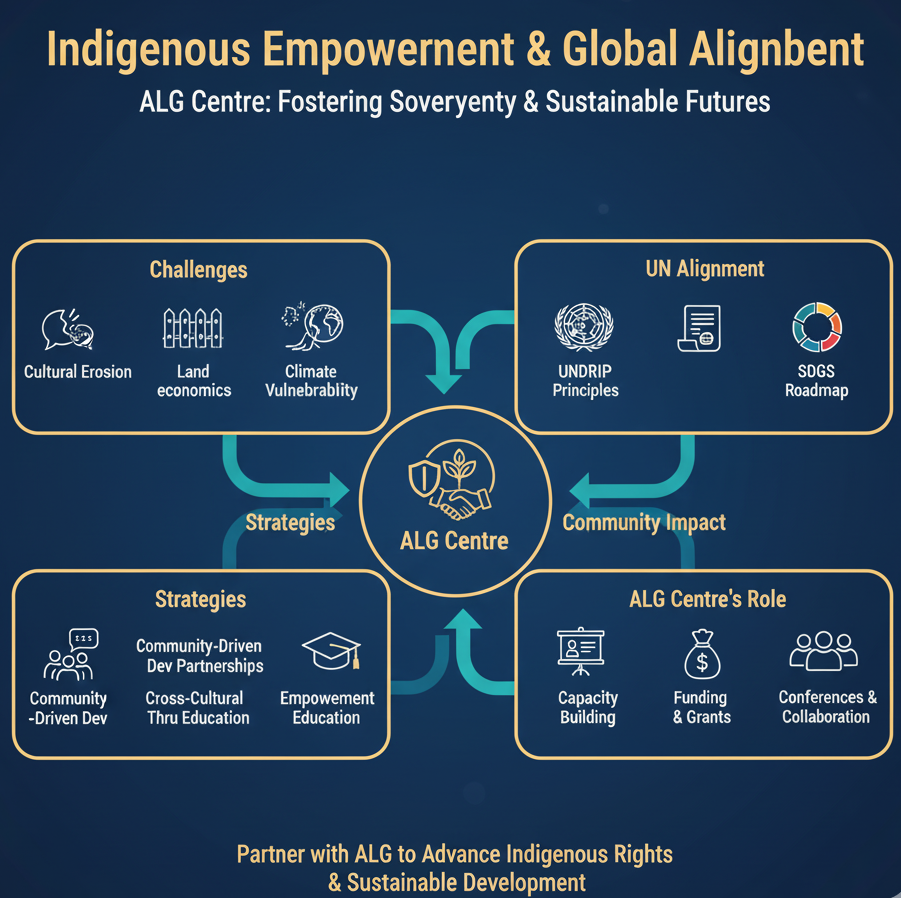
Indigenous communities across the globe face a multitude of formidable challenges that significantly hinder their development and well-being. One of the foremost issues is cultural preservation. Many Indigenous groups are striving to maintain their unique languages, traditions, and customs amidst the pressures of globalization and assimilation. These cultural practices are essential not only for the identity of these communities but also for the intergenerational transmission of knowledge and values. The loss of language and customs would represent an irretrievable loss to humanity’s diverse cultural heritage.
Another significant challenge is land rights. Indigenous peoples often find themselves in conflict with government entities and private enterprises over land ownership and usage. These communities rely on their ancestral lands for sustenance, cultural practices, and spiritual rituals. Sadly, many are often displaced or have their land appropriated for industrial or agricultural use without their consent, causing a disruption in their way of life and economic stability.
Socio-economic disparities also pose a severe obstacle to the development of Indigenous communities. Many Indigenous groups grapple with higher rates of poverty, unemployment, and limited access to healthcare and education. This economic marginalization often fuels a cycle of disadvantage that is difficult to break, as communities struggle to access the same opportunities that are more readily available to the general population. The situation is further exacerbated by climate change, which disproportionately affects Indigenous lands, threatening their livelihoods and exacerbating existing vulnerabilities.
Understanding these challenges is crucial for devising strategies that are aligned with the United Nations' Sustainable Development Goals (SDGs). With the right support, including that from organizations like the ALG Centre, Indigenous communities can work towards overcoming these obstacles, ensuring their rights and way of life are safeguarded for future generations.
The Importance of UN Alignment
Aligning indigenous initiatives with the United Nations represents a critical step toward enhancing the rights and recognition of Indigenous Peoples globally. Central to this alignment is the UN Declaration on the Rights of Indigenous Peoples (UNDRIP), a landmark document that sets forth a comprehensive framework to safeguard cultural, political, and economic rights for these communities. By adhering to the principles outlined in UNDRIP, indigenous groups can not only protect their heritage but also advocate for social justice and human rights on an international platform.
Furthermore, the Sustainable Development Goals (SDGs) provide a vital roadmap that complements the goals of indigenous communities. The SDGs encompass a variety of objectives, including poverty alleviation, equality, and environmental sustainability, all of which resonate deeply with indigenous aspirations. By associating their initiatives with the UN's SDGs, indigenous organizations can leverage a global framework to address local challenges while accessing a wider range of international support. This connection allows for increased visibility and recognition within global discourses, amplifying indigenous voices that have historically been marginalized.
The potential benefits of aligning with the UN extend beyond merely enhancing visibility; it includes securing critical resources and opportunities that can foster sustainable development within indigenous communities. International collaboration often leads to funding, knowledge exchange, and strategic partnerships that are essential for the empowerment of these communities. Moreover, aligning with UN contexts elevates local issues to the global stage, urging governments and institutions to take action on pressing social injustices faced by indigenous populations.
In summary, the alignment of indigenous initiatives with the United Nations framework is essential for promoting social equity, enhancing cultural preservation, and ensuring that indigenous voices are heard within broader global dialogues. By leveraging this alignment, indigenous communities can pave the way for sustainable solutions that honor their rights and amplify their narratives on the world stage.
Strategic Considerations for Indigenous Communities
Indigenous communities seeking to effectively align with United Nations (UN) objectives can implement several strategic considerations that emphasize self-determination and cultural preservation. Central to these strategies is community-driven development, which prioritizes engagement and input from community members in decision-making processes. This approach ensures that development initiatives reflect the unique needs and aspirations of Indigenous peoples, thereby fostering a sense of ownership and increasing the likelihood of sustainable outcomes. Communities can facilitate this by conducting regular consultations, encouraging local leadership participation, and integrating traditional knowledge into development plans.
Another crucial strategy involves forging cross-cultural partnerships. By collaborating with other communities, NGOs, and governmental organizations, Indigenous groups can share resources, knowledge, and expertise. These partnerships not only enhance the capacity of Indigenous communities to advocate for themselves but also raise awareness of the challenges they face. It is essential for all parties in these collaborations to approach each other with mutual respect and understanding, establishing a foundation for long-term relationships that benefit all involved.
Empowerment through education emerges as a vital strategy for Indigenous communities. By prioritizing educational initiatives that are culturally relevant and tailored to the specific needs of their populations, Indigenous groups can foster greater participation in political and social processes. This could include the development of curricula that incorporate Indigenous histories, languages, and worldviews, alongside partnerships with educational institutions that support Indigenous students. Education acts as a powerful tool for community empowerment and sustainable development.
Finally, advocacy for policy changes is essential for aligning Indigenous interests with UN objectives. Indigenous communities can actively engage in political advocacy by forming coalitions and mobilizing their members to advocate for policy modifications at local, national, and international levels. This strategic focus not only amplifies their voice but also ensures that policies reflect their rights and interests, ultimately contributing to broader efforts in achieving social justice and equity.
The Role of ALG Centre in Supporting Indigenous Initiatives
The ALG Centre plays a critical role in assisting Indigenous communities as they strive for alignment with the United Nations Sustainable Development Goals (SDGs) and other global initiatives. The Centre is dedicated to empowering these communities by providing resources, tools, and strategic guidance tailored to their unique needs and aspirations. Its mission is to create sustainable and inclusive programs that promote Indigenous sovereignty, resilience, and self-determination while fostering a positive relationship between Indigenous populations and governmental organizations.
One of the primary focuses of the ALG Centre is to enhance capacity building within Indigenous communities. This involves offering training workshops, mentorship programs, and educational resources that equip individuals with the skills necessary to effectively navigate the complexities of policy-making and program implementation. By prioritizing community involvement and leadership development, the Centre ensures that Indigenous voices are heard and respected in decision-making processes, both locally and internationally.
The ALG Centre also emphasizes collaboration as a cornerstone of its approach. By facilitating partnerships with other organizations, governmental bodies, and stakeholders, the Centre creates a network of support that maximizes the resources available to Indigenous groups. Through participatory planning processes, Indigenous communities can actively contribute to developing programs that reflect their priorities and cultural values. This collaborative approach not only enhances the success of initiatives but also fosters a sense of ownership among community members.
Innovation is another key aspect of the ALG Centre's strategy. By promoting the integration of traditional knowledge and modern practices, Indigenous initiatives can be designed to meet contemporary challenges while respecting cultural heritage. The Centre encourages creative problem-solving and the implementation of sustainable practices that reinforce the connection between Indigenous peoples and their environments. In conclusion, the ALG Centre is an invaluable ally to Indigenous communities in their quest for alignment and growth, providing essential support through capacity building, collaboration, and innovative strategies.
Organizing Workshops for Capacity Building
Workshops organized by the ALG Centre play a crucial role in empowering Indigenous communities through capacity building. These educational sessions are designed to equip community leaders and members with essential skills and knowledge, enabling them to effectively address the unique challenges they face. By immersing participants in a variety of tailored topics, the ALG Centre fosters an environment conducive to learning, collaboration, and practical application of acquired skills.
The workshops cover a diverse range of subjects, including governance, environmental stewardship, and advocacy techniques. For instance, a workshop focused on governance may address the intricacies of establishing a council, formulating community-driven policies, and navigating relationships with governmental bodies. Meanwhile, sessions on environmental stewardship emphasize traditional ecological knowledge, promoting sustainable practices that align with Indigenous values. These workshops allow participants to gain a deeper understanding of the responsibilities and opportunities that come with leadership roles within their communities.
One notable success story involves a workshop on advocacy that empowered participants to engage effectively with local government officials. Following this workshop, community members initiated dialogues that resulted in enhanced representation for Indigenous voices in regional decision-making processes. This is just one example of how the ALG Centre’s workshops can catalyze meaningful change, transforming knowledge into action. Additionally, continuous support after the workshops helps participants implement their learning, ensuring that they are well-prepared to tackle ongoing challenges.
Through these capacity-building workshops, the ALG Centre not only strengthens individual leaders but also fortifies community resilience as a whole. By cultivating skills and fostering collaboration, Indigenous communities are better equipped to advocate for their rights, engage in governance, and promote sustainable practices that are vital for their cultural heritage and future prosperity.
Securing Funding and Grants for Initiatives
The process of securing funding and grants is pivotal for Indigenous communities aiming to implement initiatives that reflect their unique needs and cultural values. The ALG Centre plays a crucial role in assisting these communities by offering guidance on effective grant writing and identifying potential funding sources that align with their goals. Understanding the intricacies of grant applications can be challenging; however, the ALG Centre equips Indigenous groups with essential skills that increase their chances of success. This includes strategies for crafting compelling proposals that resonate with funders' priorities and requirements.
One key aspect of securing funding is the identification of diverse funding opportunities. The ALG Centre encourages communities to explore various avenues such as government grants, private foundations, and corporate sponsorships that support Indigenous initiatives. By utilizing their extensive network, the ALG Centre helps connect communities with funding sources that may otherwise remain undiscovered. This proactive approach not only diversifies the funding portfolio but also enhances the financial sustainability of community projects.
Furthermore, leveraging partnerships becomes essential in maximizing funding opportunities. Collaborations with academic institutions, non-profits, and businesses can strengthen grant applications by demonstrating a unified commitment to community-driven initiatives. The ALG Centre offers support in establishing these partnerships, guiding Indigenous communities to articulate shared objectives and goals effectively.
Financial sustainability remains a significant challenge for many Indigenous initiatives. The ALG Centre emphasizes the importance of developing a long-term vision for funding that includes not only immediate projects but also future endeavors. By fostering a culture of resilience and adaptability, Indigenous communities can position themselves to secure necessary resources, ensuring the continuity of their projects. Through comprehensive support in funding strategies, the ALG Centre empowers Indigenous communities to transform their visions into reality, promoting self-determination and growth.
Hosting Conferences to Foster Collaboration
Conferences organized by the ALG Centre play a pivotal role in enhancing collaboration among Indigenous communities and various stakeholders. By creating an environment conducive to open dialogue and cooperation, these events provide a platform for sharing new ideas, addressing common challenges, and jointly developing strategies that align with the priorities outlined by the United Nations. The significance of networking at such conferences cannot be overstated; participants have the opportunity to engage with peers, experts, and advocates, facilitating relationships that extend beyond the duration of the event.
In recent years, the ALG Centre has hosted several influential conferences that have significantly impacted Indigenous communities. Notable speakers from various fields, including policy-making, environmental science, and cultural preservation, have shared their insights, pushing forward the discourse on Indigenous rights and sustainability. For instance, one highly regarded conference focused on sustainable development initiatives, where representatives from diverse communities shared best practices about land management, cultural education, and economic empowerment. The insights gained during these sessions have often led to actionable outcomes that strengthen community resilience and advocacy.
One of the key achievements from these conferences includes the establishment of coalitions between Indigenous communities and other stakeholders, fostering a spirit of collaboration that is essential for achieving common objectives. Such alliances enable the pooling of resources and expertise, ultimately leading to more effective initiatives for addressing the unique needs of these communities. Furthermore, the conferences have sparked innovative projects and programs inspired by the best practices shared, encouraging participants to adopt and adapt successful strategies and tools that have proven effective in other contexts.
Through ongoing efforts, the ALG Centre remains committed to empowering Indigenous voices, with conferences serving as a crucial mechanism for facilitating collaboration and ensuring that these communities are well-represented and supported in the broader conversation surrounding their rights and interests.